 Confidential
Custom CRM for Car Dealerships
Custom CRM system for car dealerships with vehicle management, document automation, and integrations with external services.
Read more →
eStudy is an online learning platform developed to simplify the creation, organization, and management of educational courses. The system brings course content, assignments, file attachments, participant management, comments, and secure user access together within one structured digital environment.
The project was created as part of a university diploma and combined academic research with practical software development. Its main objective was to demonstrate how modern web technologies can support structured learning processes and improve interaction between educators and students.
Managing educational activities through disconnected documents, messaging services, and file-sharing platforms can make the learning process difficult to organize. Course materials, assignments, participant lists, and discussions may become distributed across multiple systems, reducing clarity for both educators and students.
eStudy addresses this problem by providing a centralized platform where educators can create courses, manage participants, publish assignments, attach supporting materials, and communicate with students through assignment comments.
The result is a more consistent learning workflow in which educational content and user interactions are organized within a single application.
Educators can create, edit, and delete courses through the platform. Each course can contain its own educational content, assignments, participant list, and related discussions.
Participant management allows educators to control which users have access to a specific course and its materials. This provides a structured way to organize separate learning groups within the same system.
Assignments can be created and updated directly within a course. Educators can provide task descriptions, attach supporting files, modify existing assignments, and remove tasks that are no longer relevant.
Centralizing assignments within the course helps students clearly understand what work is required and gives them convenient access to the materials associated with each task.
The platform supports file attachments for assignments, allowing educators to provide additional documents and learning materials alongside task descriptions.
This functionality makes it possible to keep instructions and supporting resources connected to the relevant assignment instead of distributing them through external services.
Students and educators can leave comments on assignments, creating a dedicated space for questions, explanations, and feedback.
The comment system supports communication within the context of a specific task, making discussions easier to follow. Moderators can remove inappropriate or outdated comments when necessary.
Educators can select and manage the participants of each course. This ensures that course materials and assignments are available to the appropriate group of users.
By connecting participants directly to courses, the platform provides a clear structure for organizing access and managing educational groups.
The platform includes a secure authentication system that protects user accounts and restricts access to private course information.
Laravel Sanctum is used to authenticate API requests and ensure that protected functionality is available only to authorized users.
The learning process is organized through a straightforward workflow:
Users create an account and sign in securely.
Educators create courses and add the required participants.
Assignments and supporting files are published within each course.
Students access the courses available to them and review the assigned tasks.
Students and educators communicate through comments connected to individual assignments.
Educators update course content, manage participants, and remove outdated materials when necessary.
Moderators can manage comments to maintain an appropriate communication environment.
This workflow keeps course administration, educational materials, assignments, and communication connected within one system.
eStudy was designed to support different approaches to organizing the learning process. The platform can be used for traditional courses, project-based education, independent study, and blended learning.
Course and participant management provide the organizational structure, while assignments, attachments, and comments support practical work and communication between users.
This combination makes the platform adaptable to different subjects, teaching methods, and educational group sizes.
The platform was developed using a separated frontend and backend architecture:
Laravel – for backend architecture, application logic, database operations, course management, assignments, comments, and participant-related functionality.
Laravel Sanctum – for secure authentication and protected API access.
REST API – for communication between the Laravel backend and React frontend.
React – for building dynamic and reusable user interface components.
TypeScript – for structured frontend development, type safety, and improved code maintainability.
Redux Toolkit – for centralized state management and predictable handling of application data.
Axios – for sending requests between frontend components and backend API endpoints.
SCSS – for modular interface styling and maintaining a consistent visual structure across the platform.
This architecture creates a clear separation between backend business logic and frontend presentation. It also makes individual parts of the application easier to develop, test, maintain, and extend.
eStudy was developed as a university diploma project, so the work included both practical implementation and theoretical research.
The academic part explored the use of digital technologies in education, approaches to organizing online learning, and the role of interactive tools in communication between students and educators.
The practical part transformed these concepts into a functional web application with user authentication, course administration, assignments, file management, comments, participant management, and API-based communication between the frontend and backend.
eStudy demonstrates the development of a complete full-stack application that combines educational functionality with a modern technical architecture.
The project provided practical experience with Laravel, React, TypeScript, Redux Toolkit, Laravel Sanctum, REST API development, file handling, authentication, state management, and frontend-backend integration.
The resulting platform provides a structured foundation for managing online courses and can be extended with additional functionality such as assignment submissions, progress tracking, grading, notifications, schedules, and expanded user roles.
A closer look at the design and functionality of this project.
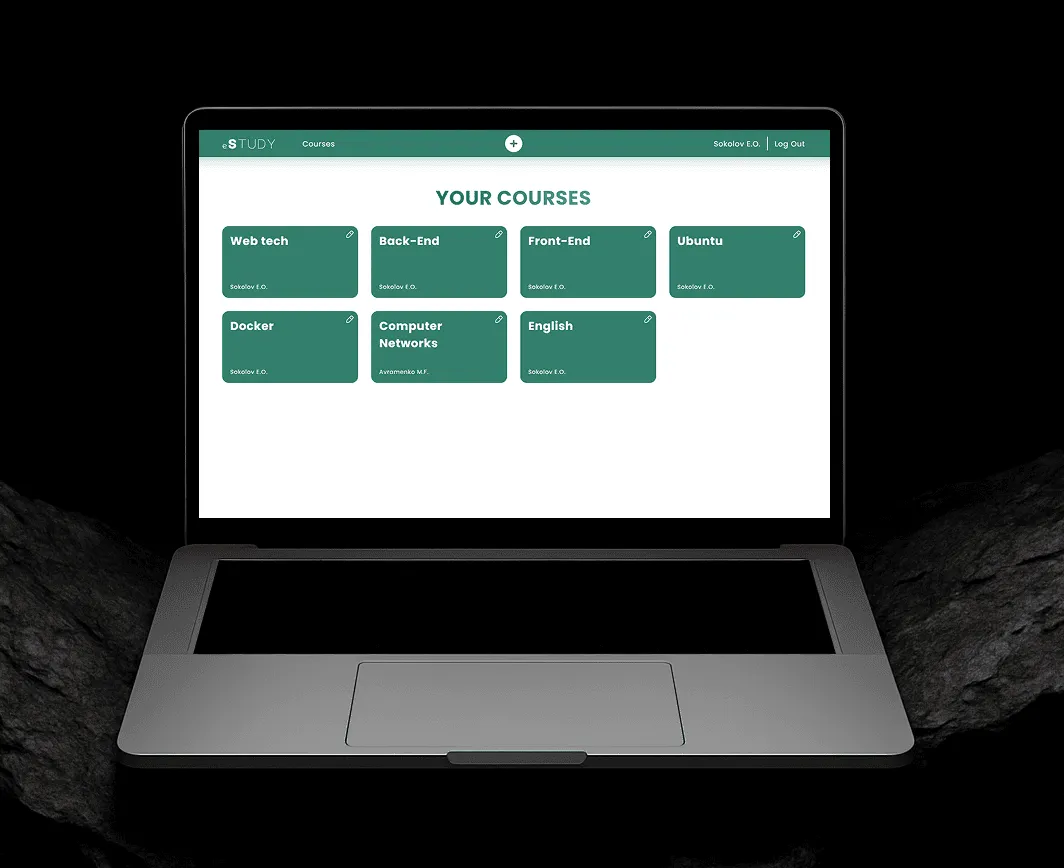
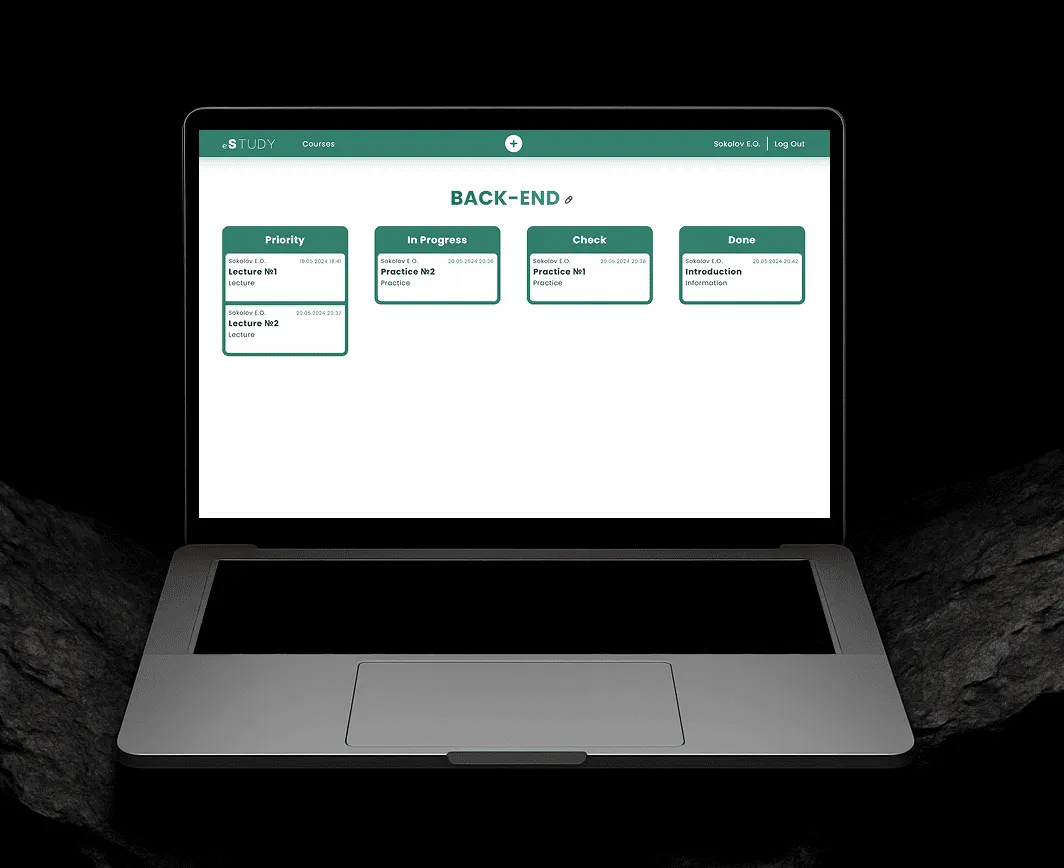
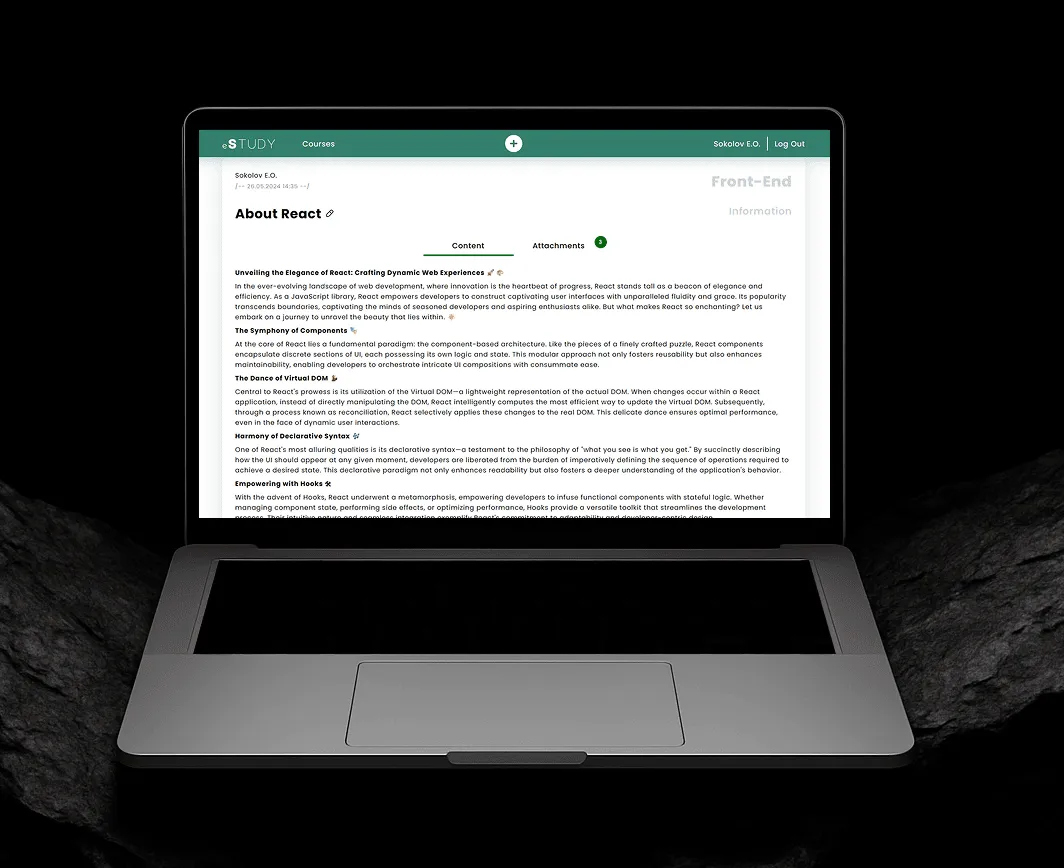
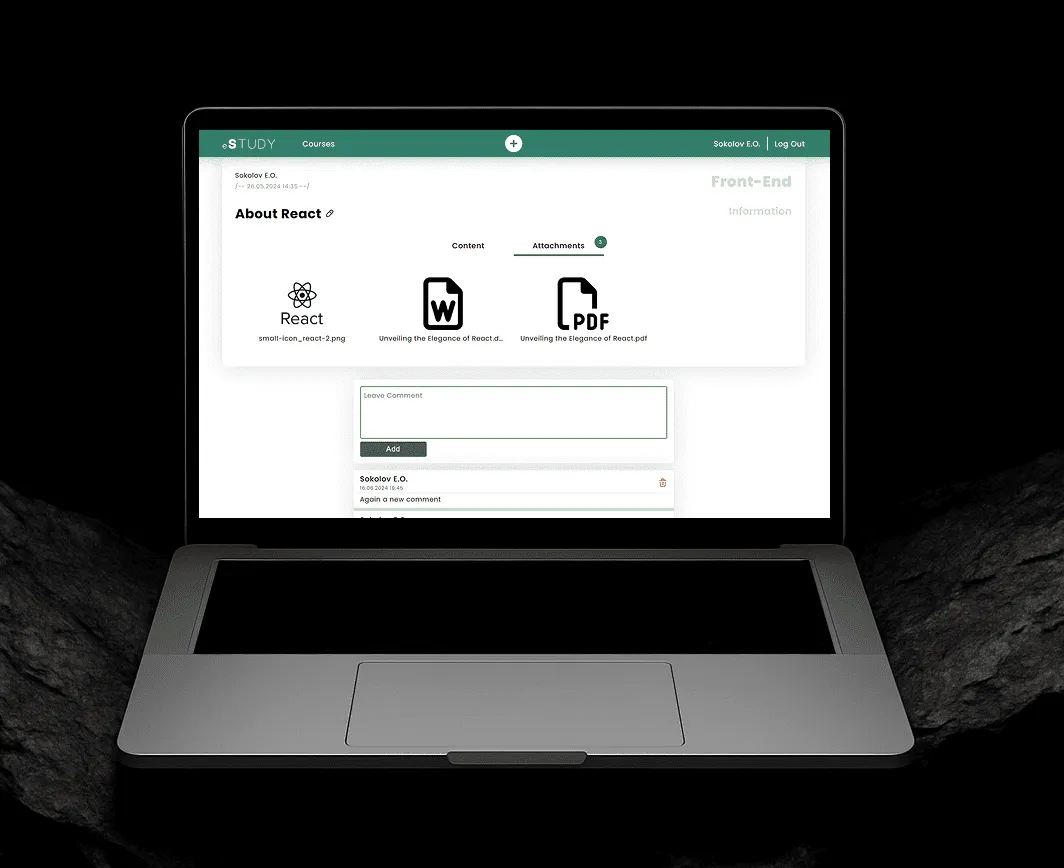
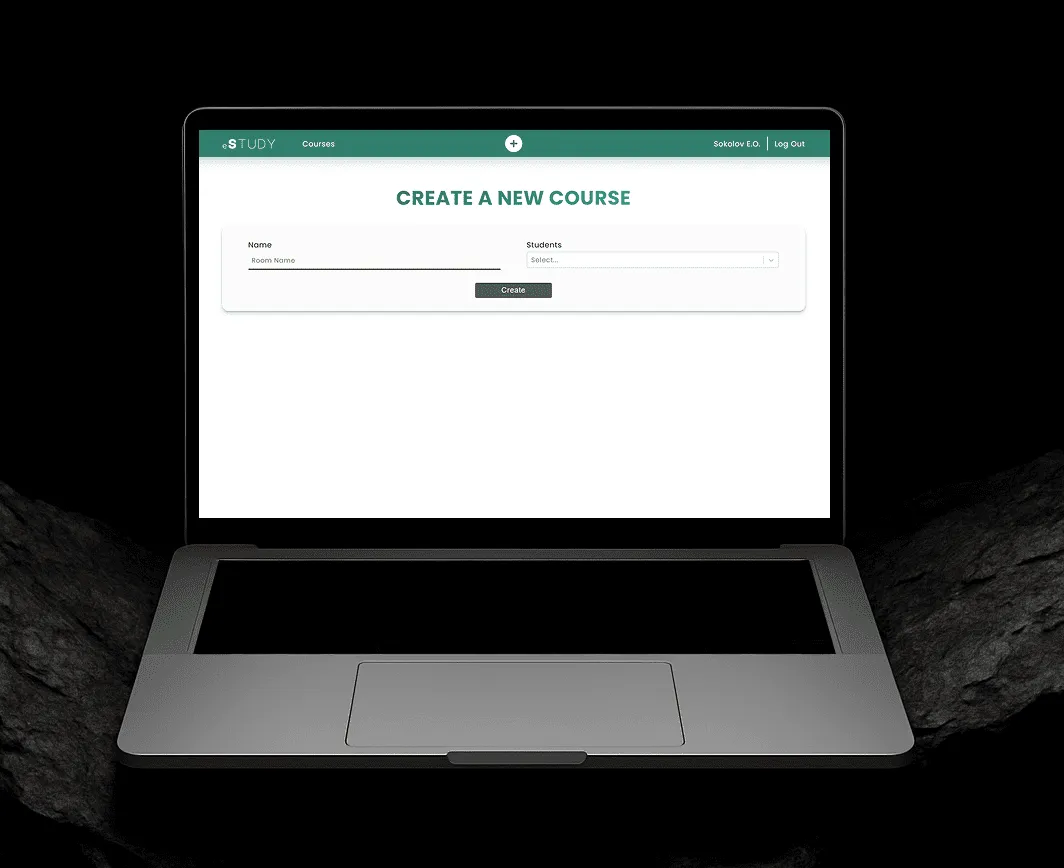
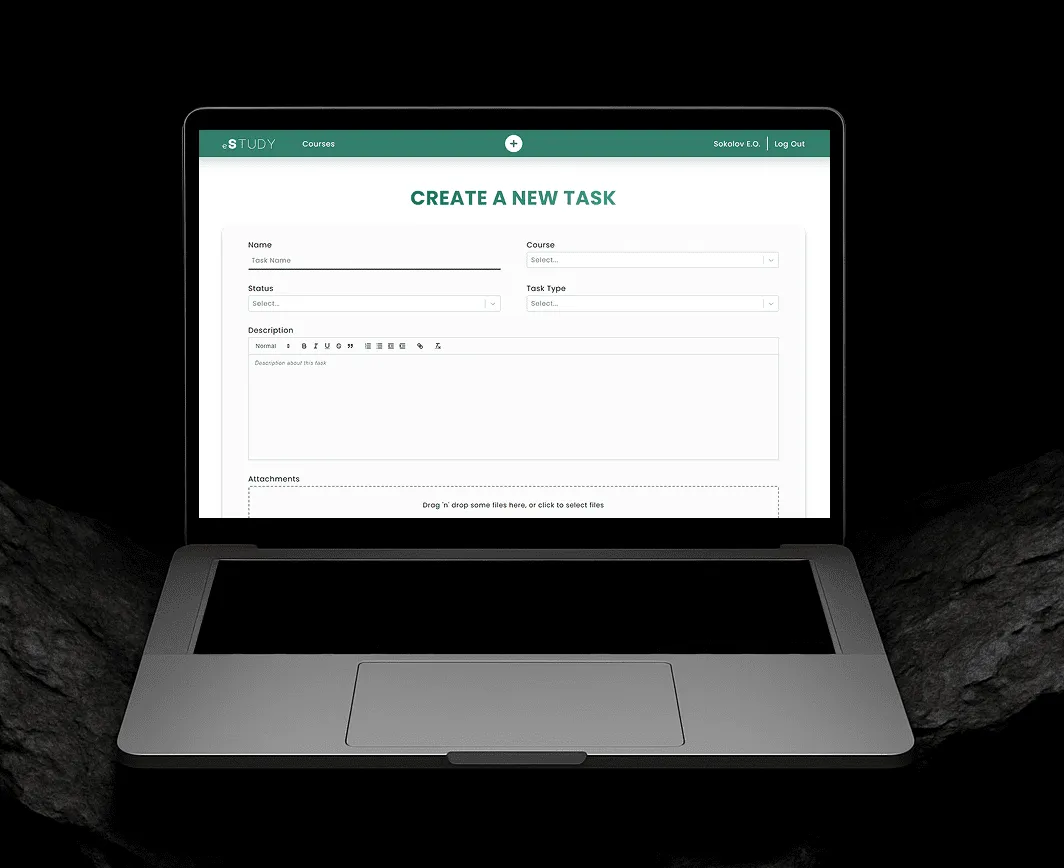
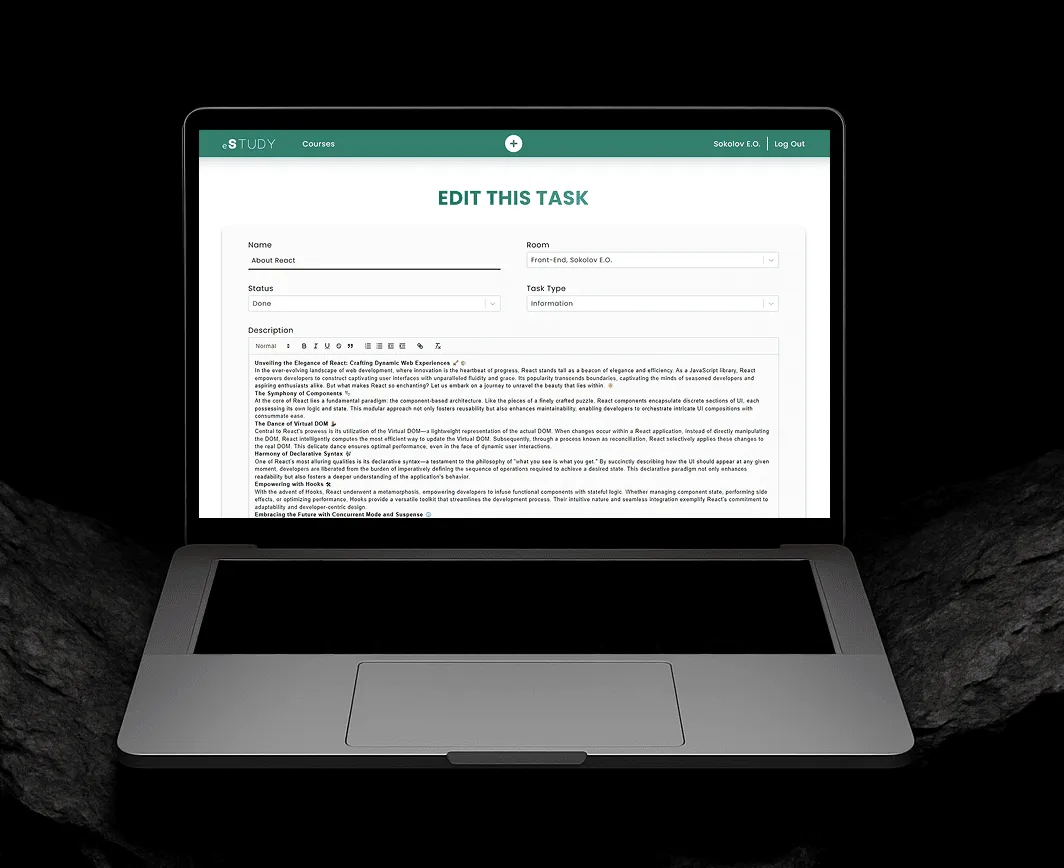

The completed eStudy platform demonstrates how a centralized digital environment can simplify course administration, organize educational materials, and improve communication between educators and students. By combining course management, assignments, file attachments, comments, participant controls, and secure access, the system provides a structured foundation for managing online learning.
The project delivered several practical outcomes:
Centralized course management that brings educational content, assignments, participants, and discussions together within one application.
Improved access to learning materials through assignments with directly connected instructions and file attachments.
Context-based communication through comments linked to individual assignments.
Structured participant management that allows access to be organized separately for each course.
Secure frontend-backend communication through REST API endpoints protected with Laravel Sanctum.
A scalable technical foundation that can support future functionality such as submissions, grading, progress tracking, schedules, and notifications.
From a technical perspective, the project provided practical experience in building a complete full-stack application with Laravel, React, TypeScript, Redux Toolkit, REST API, Laravel Sanctum, Axios, and SCSS. It also strengthened my understanding of authentication, file handling, relational data, centralized state management, API integration, and the separation of frontend and backend responsibilities.
eStudy represents more than a theoretical academic concept. It is a functional educational platform that transforms research and software requirements into a structured web application with practical use cases.
The project successfully connected academic research with modern software development and became an important step in strengthening my full-stack development skills. It demonstrates my ability to plan application architecture, implement interconnected business modules, build secure API-based communication, and turn educational requirements into a working digital solution.
Discover more projects that showcase different technologies and business challenges.
Confidential
Custom CRM system for car dealerships with vehicle management, document automation, and integrations with external services.
Read more →
An interactive React-based mini-website featuring an air raid alert map, military loss statistics, and a small casual game. The project uses Redux for state management, Axios for API requests, and SCSS for responsive interface styling.
Read more → Confidential
A Google Ads-integrated keyword research platform with automated collection, task management, email reports, and Excel and CSV exports.
Read more →Have a similar idea in mind? Let’s turn it into reality.